Aquaponic Systems

The Single IBC Tote System is one of the easiest systems to put together if you have the right tools available. One of the benefits to the system is that it will essentially come with a grow bed and fish tank once you cut the IBC tote.

Below is a list of items needed to build yourself a system.

The Grow Beds

  • Cut from an end of a recycled IBC Tote.Aquaponics Growbed
  • Metal tube frame for added strength
  • Interior – 37″ wide x 45″ long x 14″ deep
  • Exterior – 40″ wide x 48″ long x 23.5″ tall
  • Edged at the top with PVC to protect you from dangerous sharp edges.
  • Made from fully cleaned Totes that have only held food-grade materials
  • Pre-drilled to accept our high-quality siphons

The Fish Tank

Aquaponics IBC Fish Tank

  • Made from fully cleaned Totes that have only held food-grade materials
  • 200 Gallon tank (1-Bed Tote System)
  • Interior – 37″ wide x 45″ long x 25″ deep
  • Exterior – 40″ wide x 48″ long x 32″ tall
  • This size tank will grow approximately 40 edible fish up to plate size annually.
  • 275 Gallon tank (3-Bed Tote System)
  • Interior – 37″ wide x 45″ long x 39″ deep
  • Exterior – 40″ wide x 48″ long x 46″ tall
  • This size tank will grow approximately 55 edible fish up to plate size annually.
  • You should also add an aeration bar to provide constant oxygenation to the fish tank.
  • You should also add  a drain at the bottom of the tank.

The Plumbing

Aquaponics Hardware

  • Appropriately sized, magnetic drive, submersible pump (see chart above)
  • Oxygenation bar to add a constant supply of oxygen to your fish tank
  • Air pump for additional tank oxygenation.
  • 4 outlet pump for the 200 gallon fish tank, which includes 20 feet of air tubing and four 6″ air stones
  • 6 outlet commercial air pump for the 275 gallon fish tank, which includes 28 feet of air tubing and six 6″ air stones
  • Bell Siphons – Each grow bed should have it’s own media guard and bell siphon assembly for fast, reliable drainage.
  • Plumbing Fittings – You will need a bulkhead and plumbing fittings you will need for your system. We’ve even included a few extra pieces to give you maximum flexibility in laying out your system

Extras…

  • Digital tank thermometer
  • API Master Test Kit
  • Medium Cycling Kit
  • “Aquaponics Explained” Video
  • Thorough, illustrated instructions
  • A trusted support team that will be there the to help you at no cost by phone or email for as long as you own your system

Grow Media

Grow MediaExpanded Clay Grow Media – This is our hands down favorite grow media because it is light weight, lasts forever, and is easy on your hands! Each Tote Grow Bed requires 315 liters of grow media (seven 45-liter bags).  You can also use 3/4″ gravel in your growbeds, but it is twice as heavy, it might change the pH of your system, and it is tough on your hands!


Below are some videos from youtube on different ideas on how to put it all together

Our son started school down the street at little non profit preschool and has really been enjoying it. The school is an old house with two classes. Our son is in the younger class with around 15 kids who range between the age of 3 and 4 years old.

planting seeds

A couple of weeks ago our son’s teacher sent a notice home with the kids asking any parents to get involved if they had the time. I think a dad started teaching them futbol/soccer, and another parent is helping them stretch. My wife and I volunteered to teach a 30 minute garden class once a week on Thursday mornings. Yesterday was our first class and it was a lot of fun. We worked on the four main things you need for a seed to grow, soil, water, sun and love.

adding soil

I gathered some supplies from the house soil, seed tray and seeds, and the kids all participated as we planted around 50 oak lettuce seeds.

The kids were all pretty stocked and interested in what it was we were doing. It was right up their alley, dirt and water. They all took part in handling the soil, planting the seed, and watering the seed.

mal pais costa rica

Once we added water to the newly planted seeds we moved them into a green house that was already at the school.

Another family built a small green house for the school a couple of years back so that the kids could keep a garden. It is a creative dome design shade garden that helps keep the brutal elements at bay.

tropical style

It is difficult to grow food by the beach in the tropics. The heat, humidity, salt, soil, bugs, critters and every creepy thing under the sun has its tole on whatever it is you are trying to grow. The shade garden or green house is almost a necessity if you want to have any type of real success growing next to the beach. Up in the hills, just a few kilometers away it is a entirely different situation.


Over the next few classes we will watch the seeds grow, plant them into the garden and start making our own soil out of compost.

Below are a couple of coloring pictures for kids to enjoy.

The top three most important elements for a good garden are Soil, Water & Sunlight

garden coloring picture

Farmer Ted, our mascot and the original Urban Fish Farmer

aquaponics coloring picture

Composting can be fun to do and learn

composting

Planting a Garden

gardening pictures

green house

Hacienda Okhra Project is a concept community created by Georges Lefebvre located in the tropical hills of Mal Pais on the Southern Nicola Peninsula in Costa Rica.

A little over a year ago Hacienda Okhra Project started developing natural hydroponic and organic gardens to begin providing local grown produce to the people in the surrounding communities. With a growing population of nationals and expats from all around the world the local communities had an abundance of culture -  but they lacked healthy produce, free of chemicals and insecticides.

hacienda okhra

Due to lax regulations and an abundance of insects, Costa Rica uses more insecticides per capita than most developed and under developed countries around the world. With a tropical climate you can get fresh produce all year but there is no telling what you are actually putting into your body when it comes to the chemical make-up.

There are only a handful of organic farmers in Costa Rica that are looking at local food production for adjacent communities instead of exporting it out.

Hacienda Okhra gives locals and visitors the opportunity to eat fresh natural, local grown food from soil to table all in the same day.

organic costa rica

Designed as a concept community strategically located in a blue zone, Hacienda Okrha is nestled into the breathtaking hills of Las Delicias, just above to town of Mal Pais and Santa Teresa on the Southern Nicoya Peninsula.

Hacienda  Okhra Project is  estimating a commercial production of over 700 heads of lettuce plus another 15 kilos of other veggies i.e., tomatoes, peppers, basil, pickles etc. per week. They hope to increase production plus introduce an aquaponics system to produce fish along with natural minerals early next year.

Organic Soil Production

compost bin

They recently installed some new cages for composting at their compost area plus  a vermiposting station to start producing their own worm castings.

Seed Germination

hacienda okhra project

Many of the seeds are germinated in the germinating room while some are planted directly into the pots. Hacienda Okhra project also produces a number of mixed mini green trays for local chefs in the surrounding areas. These Organic mini green trays are sold as a whole tray with over 200 miniature greens.


Lettuce Production

lettuce production

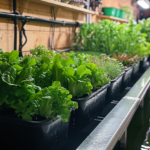
Each week they transfer 700 seedlings from the growing trays to the growing station and plant over 1000 seeds of mixed vegetables. They are currently producing over 5 different types of salad greens including Boston and Arugula.

Tomato Production

tomatoe production

The tomato growing area has over 200 mini Roma tomato plants in different stages of flowering and vegetation.  The tomatoes are in a 50/50 coco and compost growing medium, in 14″ deep growing beds.

Watering System

hacienda okhra project

Water is pumped up right now from two wells through a series of lines to an elevated holding tank. Directly below the holding tank is smaller tank where natural minerals can be added to the plants.  In the next few months we build our fish tanks where you see them placed in the above image.

The water will eventually flow up from the fish tanks to the sump reservoir  below the storage tank. From there the nutrient rich water filled with fish waist will flow into the grow rooms via a gravity feed. The excess water from the grow areas drain directly into outdoor gardens leading down hill with growing swells eventually feeding back into the wells.


Fruit Production

Organic Avocadoes

Hacienda Okhra also produces a wonderful variety of seasonal fruit ranging from avocados, lemons, oranges, papaya, bananas, limes and more.

Education

tomatoe production

Hacienda Okhra Project offers private classes for tourists and locals on how to make your own soil, produce your own seeds and grow your own food. They also offer classes on aquaponics and how to build and maintain home-scale to commercial  systems. Pluss in depth courses on how to get started, what to grow, what to keep in mind and what to look out for.

To schedule a class of find out more contact Hacienda Okhra Project

Private Dinners

Hacienda Okhra Project offers private dinners and classes for tourists and locals on how to make and grow their own food. With world renown chefs and service they offer a one of a kind dining experience.Perfect for wedding parties and events.

To schedule a dinner of find out more contact Hacienda Okhra Project

Vacation Rentals

Haceienda Okhra Project offers three different vacation rentals for guests visiting the area.  With  a one-bedroom, two-bedroom and three-bedroom unit there is something to fit any size party.

Check out http://www.haciendaokhra.com for more information about vacation rentals

The Break Room

Hacienda okhra

The break room gives you a little place to blow of some steam or work on some new lip tricks right next to where the tomatos are growing

More updates on the Hacienda Okhra Project to come.

Here at Urban Fish Farmer we talk a lot about different ideas and plans to create the perfect home scale aquaponics systems. The question does arise from time to time, “What if you want to go bigger?” even better yet, “What if you want to do Aquaponics for profit?”

aquaponics for profit

If you are just starting out these questions may not be in your mind yet, but that does not mean that they are not too far off on the horizon.

Murray Hallman at http://www.ecofilms.com.au/ is kind of like a self proclaimed guru when it comes to Aquaponics. He has put together a few How-To videos that are very informative for those just getting started. His dedication and time to the art of growing vegetables simultaneously with fish is responsible for getting many home-scale and commercial farmers into producing their own organic productions.

In the following video Murray Hallam talks about converting from hydroponics to aquaponics and making a profit with from his latest DVD “Aquaponics Secrets.”